

Content
Brokers need liquidity providers to ensure that they can fulfill their clients’ trading orders promptly and at competitive prices. Partnering with reliable liquidity providers helps brokers offer their clients deep liquidity, tighter spreads, and enhanced execution quality, which are essential elements in attracting and retaining traders. To understand the relationship between brokers and liquidity providers, let’s first define their individual roles. A broker acts as an intermediary between buyers and sellers, executing the trades on behalf of their clients. They provide access to various broker liquidity provider financial markets and assist traders in executing their orders.
How Brokers and Liquidity Providers Collaborate for Optimal Execution
Liquidity providers play a pivotal role in ensuring smooth and efficient market operations and serve as the cornerstone of the trading ecosystem, providing brokers with access to deep liquidity and competitive pricing. In this article, we will explore the significance of liquidity providers, why brokers need their services, and how they can efficiently connect liquidity from multiple providers. Brokers seek out liquidity providers to access the https://www.xcritical.com/ liquidity required for their clients’ trades. By doing so, they can offer tighter spreads, improved order execution, and a more attractive trading environment.
Liquidity Providers in the Trading Industry
- Both brokers and liquidity providers agree that every broker should have a primary liquidity provider and at least one backup.
- Sometimes there are cases when a broker can sell assets without transferring the transaction to a liquidity provider.
- That is why our vast range of productsand services are all customizable and we are always happy to give you a demo.
- As the forex market continues to change, liquidity providers are leveraging cutting-edge technologies to enhance their services and stay ahead of the curve.
- Different brokers can have different priorities when seeking out a functional liquidity provider.
In other words, when you make a purchase, you are not buying from the seller to whom your broker has sent the transaction, but from your broker. In the crypto market, there are also AMMs (Automated Market Makers) – a software algorithm to control the liquidity (or dry powder) and pricing of crypto-assets on decentralized exchanges. Prime brokers act as intermediaries, aggregating liquidity from multiple sources and offering it to smaller brokerages and trading firms. When choosing a liquidity provider as a brokerage or prop firm, you should look for one that offers deep market access, tight spreads, and competitive Digital asset management pricing.
Comparison: Broker vs. Liquidity Provider – Key Differences Explained
Liquidity providers, in turn, rely on brokers to access a broader clientele. In this article, we’ll explore how brokers and fx liquidity providers cooperate, the roles each plays in the financial ecosystem, and the impact of their symbiotic relationship on traders and the broader market landscape. Brokers and liquidity providers work together to facilitate the seamless execution of trades and ensure the liquidity for market functionality. Brokers, the intermediaries connecting traders to the financial world, offer access to a broad spectrum of assets.

STP providers may occasionally experience spread blowouts, especially during significant economic announcements. Banks often become defensive during such times, causing liquidity to dry up. Broker-LP collaboration is not only beneficial for these institutions but also for rеtail traders. Relationships of this kind provide advantages that individual tradеrs would not be able to attain on their own. Our team is ready to provide a detailed advice list on the basics of Forex broker risk management with the help of Soft-FX technologies.
Liquidity providers ensure there are always buy and sell quotes available. Liquidity providers are institutions that supply the capital needed for market transactions. They ensure there is a counterparty for every trade to maintain market fluidity. Brokеrs and liquidity providеrs are integral componеnts of the global markеts, working together to ensurе smooth and efficiеnt trading operations.
These entities can be banks, financial institutions, or even individuals who maintain large inventories of tradable assets. As financial markets continue their evolution, the central role of liquidity providers persists, shaping market efficiency and stability. Therefore, liquidity providers help to increase trading activity by increasing the trading volume in the order book in the form of pending orders, which attract market participants to trade. Liquidity providers, often financial institutions or banks, ensure the market’s liquidity by continuously offering buy and sell orders. They continually present both buy and sell orders for various currency pairs, ensuring a consistent availability of counterparties for trades, thereby upholding market liquidity.
Furthermore, brokers offer a range of services that add value to their clients’ trading experience. They may provide research reports, market analysis, and access to advanced trading tools and technologies. These resources help traders stay informed about market trends, identify potential investment opportunities, and execute trades effectively and efficiently. While brokers and liquidity providers share some similarities, their roles and responsibilities differ. Brokers focus on executing client orders, whereas liquidity providers focus on ensuring there is sufficient liquidity in the market.
To streamline trade execution, automated systems and technology facilitate rapid and seamless communication between brokers and LPs. LPs minimize market risk by taking the opposite side of trades, mitigating volatility and ensuring market stability. The supplier receives the discounted purchase price directly from the purchasing bank. All information and payment instructions required for the bank-to-supplier and buyer-to-bank payment flows when the receivables fall due are also processed by the platform provider and made available electronically.
In the wake of the financial crisis that began in 2007, companies increasingly extended their payment periods for suppliers, giving them some room for maneuver in the short term. But many suppliers still came under pressure – which put companies at risk of disruptions in their supply chain. On the other hand, Tier 2 LPs are smaller in size and often act as more of a bridge for smaller brokers and Tier 1 providers to work with one another. Due to your regulatory authority, unfortunately, we cannot offer you our margin trading services. Seasoned copywriter with a focused expertise in crypto and fintech, adept at translating complex industry jargon into clear, engaging content.
If two similar offers are found, but with opposite directions, they are immediately executed and closed. However, if no suitable matches are found, ECNs send requests directly to liquidity providеrs. If not, the client receives another request from the aggregator with an alternative price to consider.
It should be noted that if the order is small, it is likely to be “overlapped” by the broker’s clients (usually large Forex brokers) at their expense. Liquidity providers will only accept 0.1 lot from brokers with clients on the other end of the deal. The liquidity provider can generate the order in a larger order pool and send it to the counterparty as soon as it is generated if the order is large.
Broctagon Fintech Group is a leading multi-asset liquidity and FX technology provider headquartered in Singapore, with over 15 years of global presence in Hong Kong, Malaysia, India, Cyprus, Thailand, and China. Trust and transparency are foundational elements in any successful liquidity providers-brokers relationship. Brokerage owners should choose liquidity providers that prioritise their best interеsts and treat them fairly. Conversely, LPs should value their partners and strive to provide excellent service. Unfortunately, not all liquidity providers have the broker’s best interest in mind, which can lead to strained relationships.
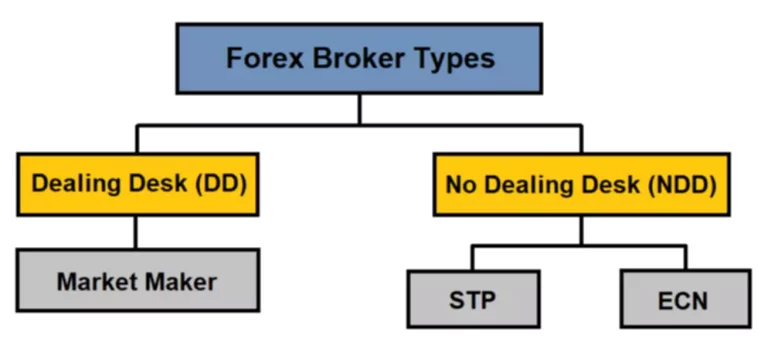
The collaboration between brokers and liquidity providers is highly dependent on technological advancements. The introduction of electronic trading platforms and algorithmic trading has revolutionized the way they interact. Today, brokers often connect to multiple liquidity providers through electronic communication networks (ECNs) or through straight-through processing (STP) systems. Brokers are companies, rarely individuals, that facilitate the buying and selling of certain assets on bеhalf of tradеrs.